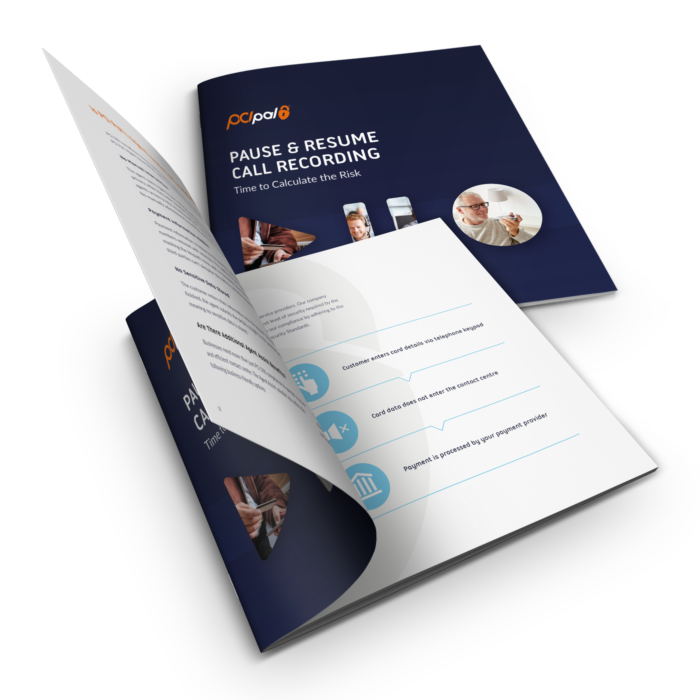
Pause and Resume Call Recording – it’s time to calculate the risk.
Managing contact centers is a tough part of doing business, with one of the major challenges being compliance with data security regulations. For any organization handling customer payments in the contact center, having a failsafe approach to managing both the security and compliance is of strategic importance. Aside from any potential financial penalties from non-compliance, your organization’s reputation and customer trust could be severely damaged.
Unfortunately, we are still seeing too many businesses using outdated Pause & Resume call recording methods in an attempt to tick the compliance checklist. Pause & Resume is an outmoded practice that has the potential to expose organizations and contact centers to unnecessary risks, possible threats and incidences of non-compliance. With more organizations operating remote or hybrid working, Pause & Resume does not descope agents or agents’ desktops, unless a clean room environment is enforced. This is something that is very difficult to administer or control remotely. It means sensitive payment data could be captured or stored illegally if the agent neglects to Pause, or indeed the data could captured by employees.
As of 2022, the global average data breach costs approximately USD$4.35 million (GBP£3.6 million) and, with the potential for reputation and customer trust to be damaged should your systems or data be compromised, could your business afford to take this risk?
Download our guide to understand and overcome the risks posed by using outdated Pause and Resume call recording technology in your contact center today.
Pause-and-resume call recording remains a common answer to PCI DSS in the contact centre, and this eBook explains why it is a fragile one. Agents forget to pause or resume under pressure, which means card data ends up in recordings that should never have captured it. The PCI Security Standards Council has confirmed that pause and resume does not reduce PCI DSS applicability to the agent, the agent desktop or the wider telephony environment — a particular problem for home-based agents. Verizon’s data on insider breaches, which compromise around 350,000 records against 30,000 for external attacks, completes the risk picture.